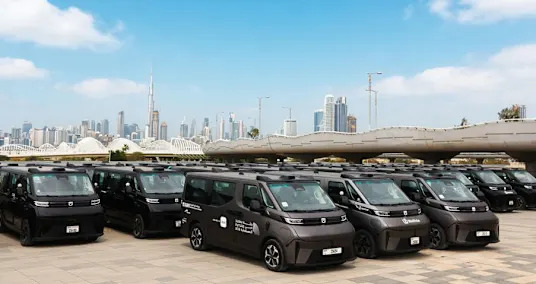
The dream of driverless taxis continues in the Gulf, where the conflict with Iran has slowed but not stopped progress on autonomous transport in Abu Dhabi, Dubai, and Riyadh.
Uber and WeRide added another driverless route in Saudi’s capital this week, linking shopping centers Hayat Mall and Riyadh Gallery. The expanded service comes after the vehicles completed more than 1,700 trips in a trial phase, according to the regulator.
Uber and WeRide have also launched fully driverless services in Dubai, beginning in popular residential and commercial areas Jumeirah and Umm Suqeim, with no safety monitor on board. Separately, Dubai Taxi Company plans to deploy more than 1,000 driverless cars in the city with Baidu’s Apollo Go, starting with a fleet of 50 this year. Earlier this month, Autogo, part of Abu Dhabi-backed technology company K2, began offering rides on Yas Island, and it plans to expand to Saadiyat and Al Maryah islands.
All this is bad news for the region’s taxi drivers, a largely South Asian group whose business is already down due to the conflict with Iran.
LATEST POSTS
- 1
 23 Most Amusing Messages At any point Sent Among Youngsters and Their Folks
 - 2It's been 20 years since MTV's golden couple split. These producers saw it all unravel.
- 3Mom warns of Christmas gift hazard as daughter recovers in hospital
- 4Study reveals how fast weight returns after ending GLP-1 drugs
- 5The Quadrantid meteor shower peaks tonight, but will the full 'Wolf Moon' outshine the show?


- Report: Thailand strikes deal with Iran for safe passage of Hormuz
- EU Commission slams Israel's death penalty law for Palestinians
- Tech giants accused of not complying with Australian social media ban
- Every year, she thanks the trooper for the arrest that led to her sobriety
- The most effective method to Execute a Lung-Solid Eating routine After a Cellular breakdown in the lungs Finding
- 4K televisions for Extreme Film Watching Experience
- In these U.S. groups, deaths now exceed births. What’s happening?
- People are getting their news from AI – and it’s altering their views
- A Couple of Reasonable Guitars for 2024