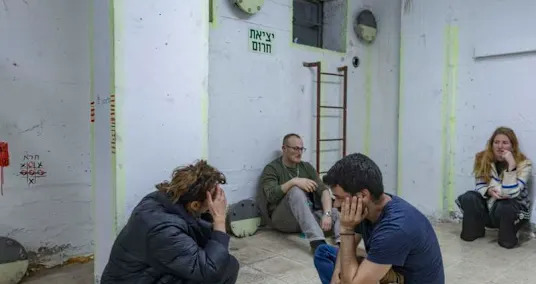
The data reflects the feelings of the young people participating in the survey, but paints a worrying picture that is mirrored in Aluma’s ongoing work in the field.
Amid the ongoing war and the upheaval it creates in everyday life, the Aluma organization, which works to expand mobility among young people in Israel and to provide support at life's crossroads of service, education, and employment, conducted an internal survey among 237 young men and women it supports. The results point to a severe and deepening crisis beneath the radar.
The data reflects the feelings of the young people participating in the survey, but paints a worrying picture that is mirrored in Aluma’s ongoing work in the field.
According to the data and Aluma’s work, many young people feel that the government does not see them and does not provide a sufficient response to their needs.
Only 3% of respondents felt that the state cares about the future of young people in Israel, whereas 74% stated that they feel that the state does not see them and does not care about their future at all, or only to a small extent.
The main impact is in the field of education, according to Aluma’s findings, with 64% of young people reporting damage or freezing of their academic plans due to the war, and 45% listed education as their primary concern.

About a quarter of those surveyed stated that they are especially worried about their economic situation.
Growing instability, diminishing optimism
At the same time, the feeling of instability is growing. A majority of the young people surveyed, 57%, reported uncertainty as a description of their feelings about their future in Israel. Only 30% felt optimistic about their future in Israel.
The potential consequences of the situations are already visible, with about 30% of young people surveyed having thought about or considered leaving Israel for an extended period, with 9% of them seriously considering or planning to leave.
Dr. Tami Halamish Eisenman, CEO of Aluma, said that "the young people we meet every day are at the very turning points of their lives - after military service, at the beginning of their studies, on the path to independence. The war caught them there, and we see the impact.”
“As in any crisis, they are the first to be affected and among the last to be talked about. This survey does not surprise us; it confirms what we hear from the field,” Eisenman said.
"The question is not whether there is a problem, but when we start addressing it. Without focused attention, we may find ourselves in a few years with much deeper gaps."
LATEST POSTS
- 1
 UPM Adhesive Materials plans new facility near New Delhi, India
 - 2These Cities Led Global Jet-Setting In 2025, According To New Data
- 3Can scientists detect life without knowing what it looks like? Research using machine learning offers a new way
- 4Spotify Wrapped and Apple Music Replay are here: Top songs, albums and artists of 2025
- 5A Gastronomic Experience in Healthy Enjoyments: A Survey of \Nutritious and Tasty\ Solid Cooking Recipe Book



- Getting through a Lifelong Change: Individual Examples of overcoming adversity
- Figure out How to Pick the Right Toothbrush for You
- When is MLK Day? Plus, the dates of when other federal holidays land in 2026.
- Monetary Versatility: Get ready for Life's Unforeseen Difficulties
- European nations criticise Israel’s death penalty plans
- New movies to watch this weekend: See 'They Will Kill You' in theaters, rent 'Send Help,' stream 'Pretty Lethal' on Prime Video
- Empathy and reasoning aren’t rivals – new research shows they work together to drive people to help more
- After harsh winter, Ukrainians find joy in releasing bats rescued from war
- IDF kills four terrorists equipped with weapons, surveillance gear near Gaza's Yellow Line