JPMorgan Chase CEO Jamie Dimon warned in his annual letter to shareholders that the war in Iran could lead to more stubborn inflation as well as higher interest rates than what the market is currently anticipating.
Dimon's letter was released Monday in conjunction with JPMorgan's annual report for 2025 and said that the Iran war may cause energy shocks along with disruptions to global supply chains that could cause inflation to remain higher than expected.
Inflation that persists above the Federal Reserve's 2% and rises further from its already elevated level could also prompt the central bank to raise interest rates to slow the pace of price growth.
"Now, because of the war in Iran, we additionally face the potential for significant ongoing oil and commodity price shocks, along with the reshaping of global supply chains, which may lead to stickier inflation and ultimately higher interest rates than markets currently expect," Dimon wrote.
Ny Fed President John Williams Warns Iran-driven Oil Spike Could Ripple Through Economy
Dimon said that the foremost risks facing financial markets and the economy are geopolitical in nature, including the Iran war and Russia's war in Ukraine, as both conflicts have an "impact on countries and economies across the globe that are not directly involved in war."
"Nations that are heavily dependent upon imported energy are already seeing the effects. And it's not just energy, it's commodity products that are byproducts of oil and gas, like fertilizer and helium. And given our complex global supply chains, countries are experiencing disruptions in shipbuilding, food and farming, among others," Dimon wrote.
"The outcome of current geopolitical events may very well be the defining factor in how the future global economic order unfolds – then again, it may not," he added.
Dimon said that while the most important outcome of those conflicts should be the "proper resolution of the current wars and, ultimately, peace on Earth, we do need to understand and track the economic effects" of those conflicts and the risks they pose.
Powell Warns Of New Energy Supply Shock As Gas Prices Surge: 'No One Knows How Big It Will Be'
He said that a "bad confluence of events" can generally cause some degree of a recession accompanied by high credit losses and market volatility, as well as lower asset prices and elevated unemployment, though it could play out in different ways in different places.
LATEST POSTS
- 1
 Vote In favor of Your Favored Pizza Cover
 - 2Study shows no clear link between low-fat dairy and dementia risk
- 3Vote In favor of Your Favored Web-based Venture Stage
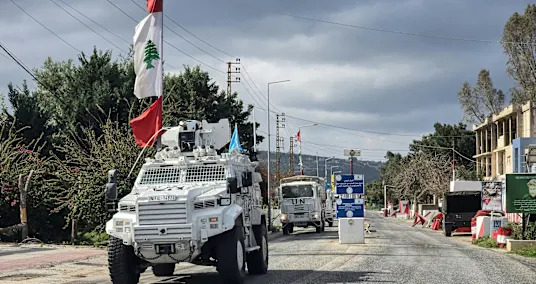
- 4Two more UN peacekeepers killed in southern Lebanon: UNIFIL
- 5Why do people get headaches and migraines? A child neurologist explains the science of head pain and how to treat it



- Hanwha Ocean secures orders worth $866m for five vessels
- Banks for High Fixed Store Rates: Augment Your Investment funds
- Moscow accuses Berlin of stifling the opposition
- 7 Fun Plans to Make Film Evenings Seriously Invigorating (You'll Cherish #5!)
- Tech Development Disclosed: A Survey of \Usefulness and Configuration in Concentration\ Tech Item
- A24's 'Backrooms' trailer shows endless fluorescent-lit spaces and terrifying mannequins melting into the floor
- Joshua Made Last-Second Seat Change That Saved His Life
- Vote In favor of Your Favored Sort Of Dress
- \Step by step instructions to Pick the Best Material Organization for Your Home\