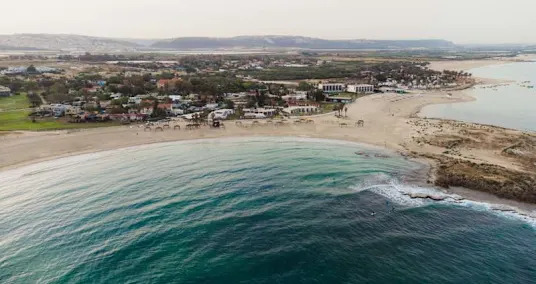
The discovery was made in an ancient shipwreck in the Dor Lagoon near the Carmel Coast, where archaeologists recovered nine pieces of unprocessed iron known as “blooms.”
Researchers from the University of Haifa said Wednesday that an underwater excavation off Israel’s northern Mediterranean coast uncovered what they described as the earliest known cargo of raw iron transported by ship, dating back around 2,600 years, Xinhua reported.
The discovery was made in an ancient shipwreck in the Dor Lagoon near the Carmel Coast, where archaeologists recovered nine pieces of unprocessed iron known as “blooms.” According to the university, the find provides direct evidence of how iron was transported in its earliest commercial stages.
The material was preserved in its original form, having solidified directly in a smelting furnace without undergoing forging or further refinement. Researchers said this distinguishes the cargo from later iron artifacts that typically show signs of shaping or tool-making.
Unlike copper and bronze, which could be melted into liquid form in ancient production processes, iron was heated with charcoal to produce a solid, porous mass. That mass was generally hammered to remove impurities and create denser material suitable for tools and implements.
The recovered blooms showed no indication of that secondary processing stage, suggesting they were transported immediately after production.

Earliest iron shipment discovered in ancient Mediterranean wreck
To determine the age and condition of the cargo, researchers conducted microscopic and chemical analyses.
Radiocarbon dating was also carried out on charred wood embedded in one of the pieces, helping confirm the timeline of the shipment. The findings were published in the journal Heritage Science.
Researchers said the cargo indicates that iron was being moved in raw form from production sites to other locations for further processing, pointing to a level of specialization in ancient manufacturing and trade networks in the Mediterranean.
The University of Haifa said the discovery provides new insight into early iron production and distribution practices in the region.
LATEST POSTS
- 1
 True serenity: Investigating Emotional well-being and the Advantages of Contemplation
 - 2Criminal Guard Lawyer Expenses: What Would it be advisable for you to Hope to Pay?
- 3Instructions to Pick the Ideal SUV Size for Seniors
- 4Daily Briefing: A bad flu season gets worse
- 5Instructions to Clean and Really focus on Your Lab Precious stone



- The Way to Monetary Health: Individual budget Change
- Kona SUV: The Courageous Minimized That is Catching Hearts Around the world
- The most effective method to Decisively Plan Your Nursing Profession for the Best Compensation Results
- My Excursion to Monetary Autonomy: Awesome ways to save cash
- Newly Built Sichuan Hydropower Bridge Collapses Into River Months After Opening
- NASA is shooting for the moon. A guide to the Artemis II mission
- ByHeart infant formula recall tied to botulism outbreak puts parents on edge
- Journalist reported killed in the Gaza Strip
- Dick Van Dyke shares his secrets to longevity as he turns 100