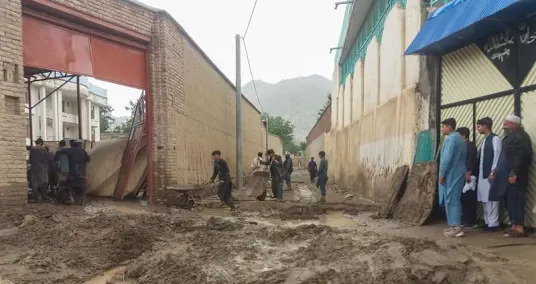
At least 61 people have been killed and 116 injured across Afghanistan since March 26 due to heavy rainfall, floods, landslides and lightning strikes, the Afghan government said on Saturday.
At least four people were still missing after floods affected thousands of families and damaged 2,448 houses, Afghan government spokesman Zabihullah Mujahid said in a post on X.
In addition, thousands of hectares of cropland was also destroyed, posing serious risks to rural communities who rely on agriculture for their livelihoods.
Deadly flooding has struck Afghanistan repeatedly in recent years, causing significant loss of life, injuries and widespread damage to homes, infrastructure and agricultural land.
Extreme weather events such as flash floods and droughts are increasing in Afghanistan, which experts link to the climate crisis.
Despite having a negligible carbon footprint, the country ranks among the most climate-affected nations and remains ill-prepared to cope after decades of conflict, poor infrastructure and a struggling economy, compounded by recent earthquakes and severe flooding.
LATEST POSTS
- 1
 How 2025 became the year of comet: The rise of interstellar 3I/ATLAS, an icy Lemmon and a cosmic SWAN
 - 2Flu season is just beginning, but doctors are already on high alert
- 3Travel Through France's Most Iconic Wine Regions By Train On An Immersive Seven-Day Journey
- 4Airport wait times won't return to normal until Congress reaches a deal to pay TSA. Here's why they still can't come to an agreement.
- 5The most effective method to Pick the Best Material Organization: Insider Tips




- What Middle East Conflict Could Mean For The World’s Largest Whale Shark Gathering
- Egypt seeks to calm tourist fears over fallout of Iran war
- Pick Your Favored kind of soup
- Artemis II crew take new photo of far side of the moon
- Russian drone slams into block of flats in deadly wave of strikes across Kyiv
- ISS astronaut evacuation shouldn't interfere with upcoming Artemis 2 moon mission, NASA chief says
- First stop, the Moon. Next stop, Mars? Why Nasa's mission matters
- A definitive Bike Standoff: Decision in favor of Your Number one Ride
- This St Nick Truly Can Advise How To Drink And Hack Your Headache